29 July 2025
South China Morning Post | Are Hong Kong’s ethnic minority groups finally breaking free from poverty?
In the first of a two-part series, Connor Mycroft counts the ways Hong Kong’s ethnic minority communities have improved with help and support, after decades of struggling to catch up with the rest of society.
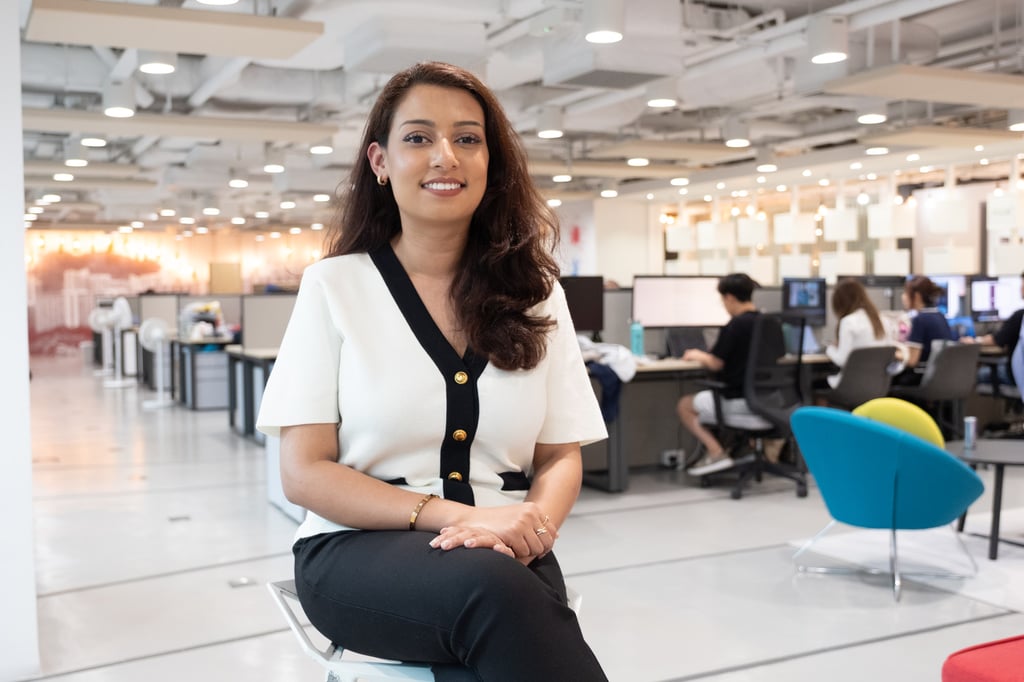
Hong Kong-born Bangladeshi Lamia Sreya Rahman has accomplished more at 28 than most people her age.
She graduated from the University of Hong Kong with first-class honours in criminology and American studies before obtaining a law degree from the Chinese University of Hong Kong.
Four years ago, she founded AI start-up Vidi Labs together with Turzo Bose, a 27-year-old from Bangladesh who came to Hong Kong to study and graduated in chemical and environmental engineering from the University of Science and Technology.
Seekr, the wearable device they designed for people with eyesight problems, including blindness, has taken off in a big way.
Outfitted with sensors and text recognition technology to describe surroundings to the wearer, the device has entered the US and Japanese markets, and the company plans to expand into South Korea this year.
In January, it picked up an innovation award at the Consumer Electronics Show in Las Vegas. Then, in May, Rahman and Bose earned a spot on the Forbes 30-under-30 Asia 2025 Social Impact list, which recognises young people who address social issues through their work.
Rahman has become a role model for young people from Hong Kong’s ethnic minority communities, a striking example of what this historically marginalised group could achieve.
Last month, she addressed about 200 young people at a forum for ethnic minority youth organised by the Zubin Foundation, which supports and provides opportunities to those from minority groups.
Addressing the participants, she said the journey to success was not always linear, but could be achieved by remaining focused on goals and pursuing them each day.
She told the Post that she was inspired by the number of ethnic minority youth at the event who were at university or working in different fields.
“That’s a signifier that Hong Kong is somewhat changing,” she said.
‘Monumental demographic shift’
Hong Kong had nearly 620,000 residents from non-Chinese ethnic minority groups, or 8.4 per cent of the population, according to the 2021 census.
Filipinos and Indonesians, mainly domestic helpers, made up about half, while Hongkongers of Indian, Pakistani and Nepalese descent made up some of the rest.
Community leaders and activists said that while problems remained, years of combined efforts by NGOs, the government and businesses had resulted in more individuals breaking free from the systemic poverty that beset those from ethnic minority groups.
“This is a massive and monumental demographic shift in Hong Kong,” said Shalini Mahtani, founder and CEO of the Zubin Foundation.
Between 2011 and 2021, the school attendance rate – a measure of the population attending full-time educational institutions – for those aged 18 to 24 from ethnic minority groups, excluding domestic helpers, rose from 38.4 per cent to 50 per cent. That brought the figure closer to the 55 per cent across the whole population.
Among South Asians, 39.2 per cent attained post-secondary education in 2021, exceeding the figure of 34.6 per cent for the entire population.
Income levels have also risen for some groups at rates outpacing those of the general population.
Between 2016 and 2021, the median monthly income of South Asians rose by a third from HK$15,000 to HK$20,000 (US$1,910 to US$2,550). That was higher than the median income of HK$19,500 for the whole population.
The improvement was greatest among those of Indian ethnicity, with their median income rising 34.6 per cent from HK$22,000 to HK$29,620, whereas groups such as the Pakistanis and Nepalis saw more modest increases.
Mahtani, a fourth-generation Hongkonger of Indian heritage, founded the Zubin Foundation 10 years ago and its June forum was meant to inspire participants to reach for their dreams.
Part of the agenda focused on how artificial intelligence (AI) was transforming job markets and highlighted emerging opportunities in the Greater Bay Area, the central government’s scheme to link Hong Kong, Macau and nine cities in neighbouring Guangdong province into an integrated economic and business hub.
Mahtani said racial discrimination still existed in Hong Kong – and she had faced it – but part of what was driving change for the city’s ethnic minority groups was the increasing number going to university.
Since her charity started offering scholarships in 2020, the number of applicants jumped from 30 in the first year to more than 350 in 2024.
She said it was “phenomenal” that at the start, applicants mostly pursued associate degrees or diplomas in early childhood education, whereas more now wanted to pursue degrees in science, technology, engineering and maths (STEM) fields.
‘But is this good enough?’
But the gains have not been evenly distributed. Non-Indian South Asians continue to struggle with lower incomes, with Pakistanis and Nepalis earning median monthly incomes of HK$15,000 and HK$17,000, respectively.
South Asians continue to work in low-end jobs as cleaners, food preparation assistants, messengers and deliverymen.
While the proportion in such jobs dropped from 30.2 per cent to 25.8 per cent between 2016 and 2021, it remained higher than the 18.2 per cent for the whole population.
Also trailing are Indonesian, Thai and Filipino Hongkongers not among the group of foreign domestic helpers, with median income levels of HK$13,000, HK$13,500 and HK$16,500, respectively.
Secretary for Home and Youth Affairs Alice Mak Mei-kuen, who attended the Zubin Foundation’s youth summit in June, acknowledged that ethnic minority groups faced challenges with education and employment, but noted that change for the better was taking place.
“When given the right support and platforms, ethnic minority youth have proven time and time again that they can excel, innovate and lead,” she said.
The government has taken steps in recent years, including setting up job and workplace schemes, as well as ethnic minority care teams to help support minority groups
Commenting on the progress made by the ethnic minority groups, John Tse Wing-ling, executive director of the Hong Kong Initiative for Diversity, said: “I agree that things are better than before, but is this good enough?”
‘We can open doors for others’
Rahman said she came from a family with limited financial means so she worked hard to earn scholarships to go to university.
She has described challenges she faced as an undergraduate, especially her weakness in Cantonese as ethnic minority students do an easier curriculum for the language in school, and having to put up with racial slurs.
She was still in university in 2019 when the Zubin Foundation put her on its Diversity List, an initiative that recognises top talent from the ethnic minority communities and recommends them for government advisory bodies.
Rahman was appointed to the Committee for the Promotion of Racial Harmony, and was a member for six years until May this year.
That appointment led her to understand the problems faced by the visually impaired.
She was delivering care packages when she met an elderly woman with a Seeing Eye dog. That chance encounter sparked the idea to find a way to help the visually impaired “see” their surroundings.
After achieving success herself, she has been working to open up opportunities for others from diverse backgrounds.
While still in university, she got involved with Empower U, an NGO providing education programmes for foreign domestic helpers and those from ethnic minority groups, and she is now a board director.
Through the organisation, she has taught classes on law and debate in local schools and has started offering internships at her company to students who go through the programmes.
“Kids of my generation who are more established are able to open doors for others,” she said.
Don’t tell children to ‘aim lower’
Other organisations have also stepped up to do more for young people from the ethnic minority community.
The non-profit KELY Support Group, which has supported young Hongkongers in various ways for three decades, began a work placement programme for ethnic minority youth in 2023.
Integrated Brilliant Education Limited, an NGO co-founded by Indian-born Hongkongers Manoj and Geetanjali Dhar to focus on equal educational opportunities, opened a trilingual kindergarten last year to improve the Chinese-language proficiency of children from various backgrounds, including those from ethnic minority groups.
On the 17th floor of Chungking Mansions, the monolithic building in the heart of Tsim Sha Tsui equally known for its vibrant multiculturalism as much as its association with nefarious activities, changes are afoot.
Earlier this year, the NGO Christian Action retrofitted a long-neglected flat next to its Centre for Refugees offices and opened Diversity Hub, a community space for ethnic minority groups and a showcase for their long history in Hong Kong.
Near the entrance, one wall has a mural showcasing a comprehensive history of the role different ethnic groups have played in Hong Kong, going back to the 19th century.
In the centre of the room, a pillar is adorned with the faces of various icons of the communities who have achieved success in diverse fields, including medicine, business and the arts.
The items on display include one of only three copies of a book on the history of the Sikhs in Hong Kong, provided by the community’s temple in Wan Chai.
The hub runs a Voices of Tomorrow programme to provide ethnic minority youth workshops and mentorships to build their confidence and skills.
Jeffrey Andrews, a senior social worker with Christian Action who helped spearhead the hub, said that despite being born and raised in Hong Kong, he had long struggled with being accepted in society and his own Indian heritage.
He described how hard it was to learn Cantonese while growing up and attending “designated” schools with a higher concentration of non-Chinese speakers. Although meant to cater to the needs of ethnic minority children, in effect, they created a segregated education system.
The term was abolished in 2013 over concerns that it affected the academic outcomes of ethnic minority youth and how they integrated into society, but critics say there is still segregation in the school system.
Andrews said the Voices of Tomorrow programme aimed to instil a sense of belonging for participants and show them that they should consider themselves Hongkongers.
It recently wrapped up its first series of sessions held over 10 weeks for 16 young people from various ethnic minority groups.
They attended workshops on public speaking, met ethnic minority guest speakers who shared their own experiences, and offered help with networking and creative pursuits in areas such as filmmaking.
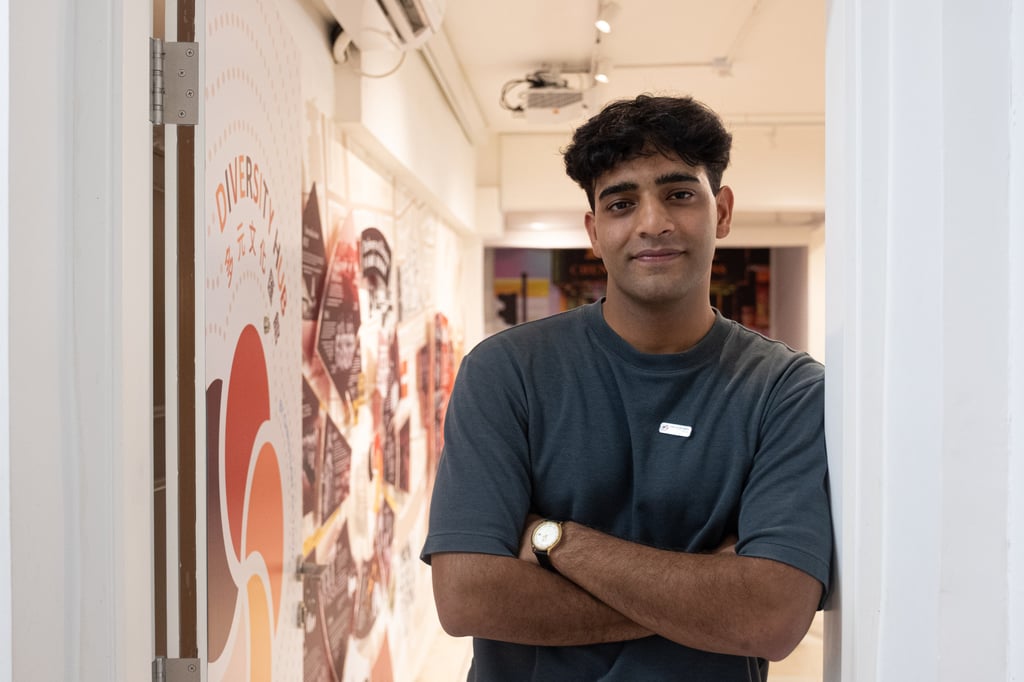
Vansh Arora, the hub’s project executive who helped run the programme, said one of the main goals was confidence building.
He said some participants described similar experiences to what he had gone through growing up when a teacher told him to “aim for something lower” rather than set his goals too high.
“When your environment is constantly degrading you, it’s so hard to be ambitious,” he said. “Through this programme, and through this support, we hope they keep remembering their initial goals.”
‘I want to make an impact’
Among the participants was Filipino Hongkonger Edric Nazareno, 18, who is studying aeronautical engineering at Polytechnic University.
His father works in the food and beverage sector and his mother is a former domestic helper, and he has three siblings.
He attributes his success to mentorships and opportunities that came his way, including a six-year scholarship from an NGO to attend an international secondary school.
Although he found it hard to fit in at first, having wealthy schoolmates who arrived in chauffeur-driven limousines, he persevered with encouragement from Andrews and went on to be his class valedictorian.
Along the way, he also received help from Section Juan, a peer support group for Filipinos in Hong Kong.
“I’ve been so blessed and so fortunate with people that want to help me, want to guide me, want to bring me into their network,” Nazareno said.
Attending the Diversity Hub’s training programme helped expand his horizons, and he also got to meet Vivek Mahbubani, a local comedian of Indian heritage, who helped him become comfortable with being nervous.
Nazareno said he hoped to pave the way for others like him, including his 10-year-old brother.
“I’m standing on the shoulders of giants,” he said, pointing to the Diversity Hub’s pillar of prominent faces from ethnic minority communities.
“I want to be one of those giants for my little brother, and I think I want my career to reflect that. Whether I become an aeronautical engineer or a banker, I’d be satisfied with just making the biggest impact I can.”




Copyright 2026 The Zubin Mahtani Gidumal Foundation Limited (registered charity in Hong Kong - IR 91/12344). Website Developed By Kshan Tech Soft Pvt. Ltd.